


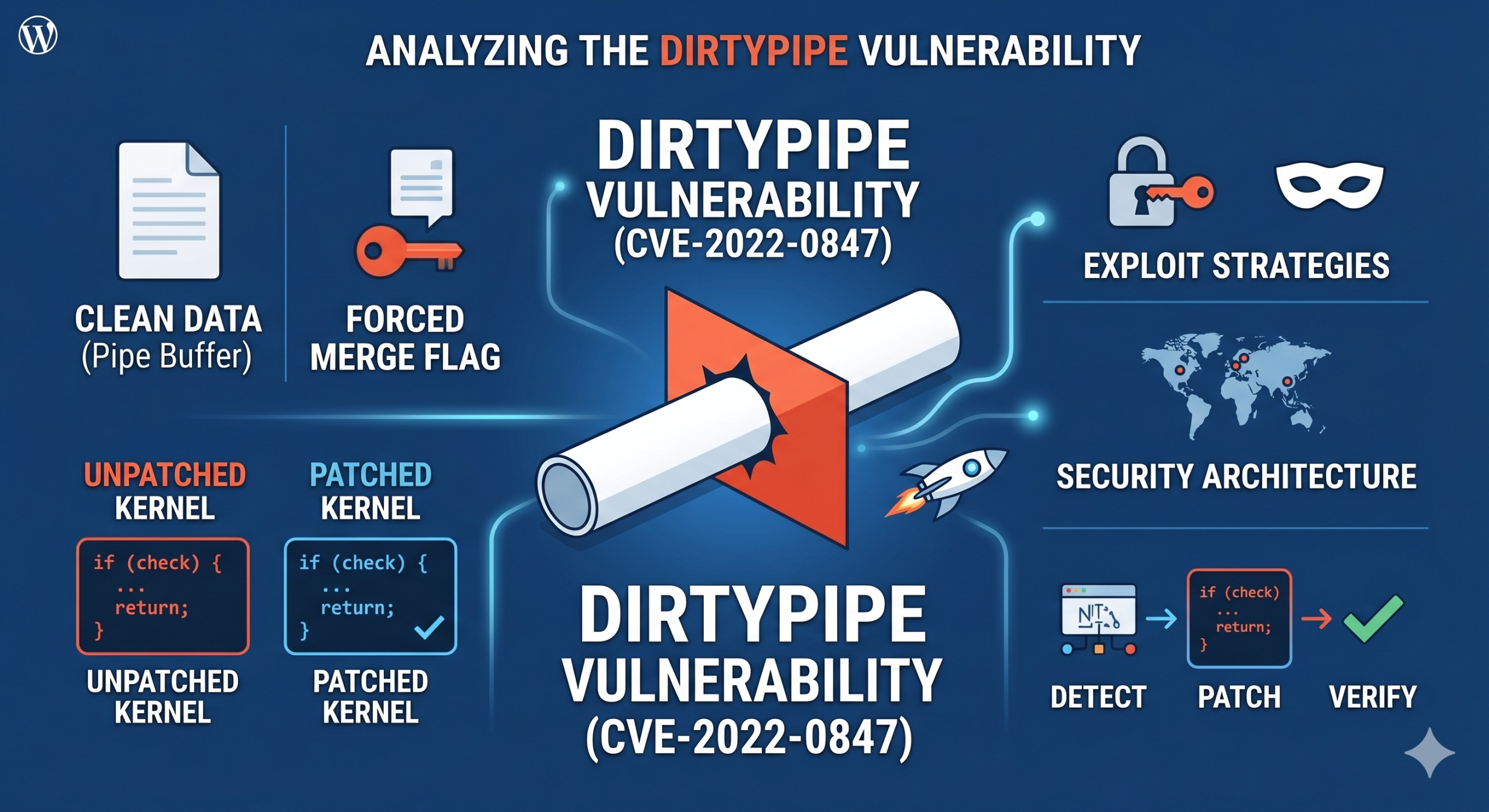
Unveiling CVE-2022-0847
The ‘DirtyPipe’ vulnerability (CVE-2022-0847) is a critical privilege escalation bug in the Linux kernel (versions 5.8 through 5.16.11). It allows an unprivileged user to overwrite data in read-only files, potentially leading to root access by modifying /etc/passwd or SUID binaries.
Technical Mechanics
DirtyPipe exploits a flaw in how the kernel handles the pipe buffer structure. Specifically, it allows a user to inject data into the page cache, even for files that are marked read-only, by failing to properly initialize the ‘flags’ member in the pipe_buffer structure.
Detecting Vulnerable Kernels
First, verify your currently running kernel version using the following terminal command:
uname -r
If your version falls within the vulnerable range, you must update immediately. Check for pending security updates on Debian/Ubuntu-based systems:
sudo apt update && sudo apt upgrade linux-image-generic
Mitigation and Remediation
The primary mitigation is upgrading the kernel to a patched version (e.g., 5.16.11+, 5.15.25+, or 5.10.102+). For systems where a reboot is not immediately possible, consider the following:
- Audit SUID Binaries: Search for binaries that could be exploited:
find / -perm -4000 -type f 2>/dev/null - Container Isolation: If you are running Docker or LXC, ensure that your containers do not run with privileged access to the host kernel.
- Kernel Patching: Use
kpatchif supported by your distribution to apply live patches without requiring a full system reboot, minimizing downtime for production servers.
# Example of checking for system updates on RHEL/CentOS systems
sudo yum update kernel
Conclusion
CVE-2022-0847 serves as a stark reminder of why kernel maintenance is non-negotiable. As a sysadmin, maintaining a proactive patching schedule—or utilizing automated patching tools—is the difference between a secure environment and a total compromise. Always test kernel updates in a staging environment before deploying to production infrastructure.
